Angled bob haircuts for round faces are an excellent way to introduce structure while preserving softness and movement. Their signature shape, usually shorter through the back and gradually longer toward the front, creates directional lines that can visually elongate fuller facial proportions.
These bobs are also surprisingly versatile. Depending on your hair texture and styling preferences, the angle can appear sharp and architectural or soft and blended. Layers, waves, side parts, and textured ends make it easy to customize the haircut without losing its distinctive graduated silhouette.
What Keeps the Angled Bob So Flattering
The enduring appeal of an angled bob comes from its ability to create definition without requiring extremely short lengths. Longer front sections extend beyond the cheeks, encouraging the eye downward and helping establish a more elongated frame around a round face.
Its adaptable structure also keeps the haircut relevant as styling trends change. A polished version feels sophisticated, while tousled layers create something relaxed and contemporary. Adjusting the graduation, length, parting, or texture allows the same fundamental haircut to suit different personalities and hair types.
Classic Angled Bob
The classic angled bob gradually transitions from a shorter back into longer front sections, creating clean lines around a round face. Its forward direction naturally draws attention below the cheeks, helping the overall silhouette appear more elongated.
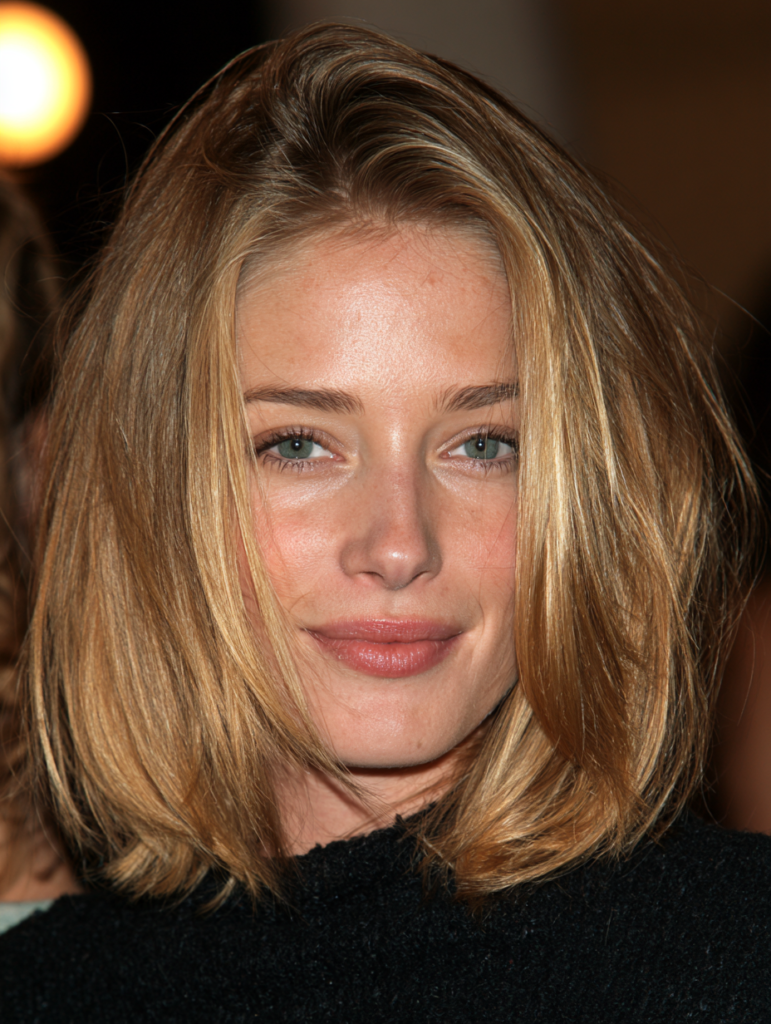
Keeping the front pieces slightly beneath the jaw strengthens this flattering effect without making the haircut excessively dramatic. Minimal layering preserves the recognizable angle, while subtle texturizing prevents the ends from looking heavy. Wear it smooth for sharper definition or add gentle bends when you prefer softer everyday movement.
Long Angled Bob
A long angled bob offers the structure of graduation while maintaining enough length for versatile styling. Front sections reaching toward the collarbone create extended vertical lines that beautifully balance softer cheeks and rounded facial proportions.

Rather than making the back dramatically short, choose gentle graduation for a sophisticated transition between lengths. This approach preserves movement while allowing ponytails or partial updos when needed. A smooth blowout highlights the angle clearly, whereas loose waves create a relaxed finish that still showcases the haircut’s distinctive forward shape.
Layered Angled Bob
Layers soften the geometric structure of an angled bob while introducing natural movement through the lengths. For round faces, keeping shorter layers above the crown rather than directly beside the cheeks can encourage flattering vertical volume.
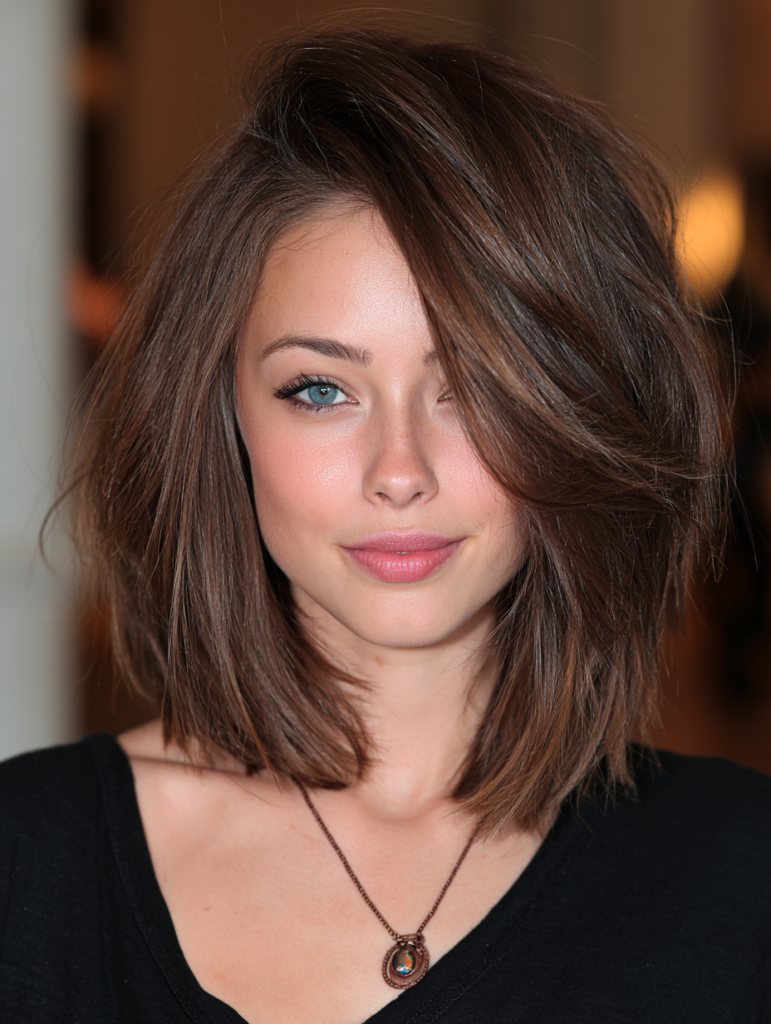
Longer layers toward the front preserve the haircut’s signature angle and provide definition around the jawline. Lightly feathered ends keep thicker hair from appearing bulky, especially when the bob falls below the chin. This variation works particularly well for anyone wanting structure without the rigid appearance of a completely blunt perimeter.
Side-Parted Angled Bob
A side part immediately introduces asymmetry, making an angled bob especially complementary to round facial proportions. The diagonal direction across the forehead breaks up symmetry while longer front sections continue drawing attention downward toward the jaw.
Allow one side to fall naturally forward while tucking the opposite section behind the ear for additional definition. Maintaining moderate crown volume also helps create visual height without widening the cheeks. Whether styled straight or softly tousled, this variation feels polished while requiring relatively simple adjustments to the classic angled shape.
Sleek Angled Bob
A sleek finish emphasizes every precise line within an angled bob, creating a sophisticated shape with noticeable definition. Smooth lengths extending beyond the jaw help frame a round face without introducing unnecessary fullness around the cheeks.
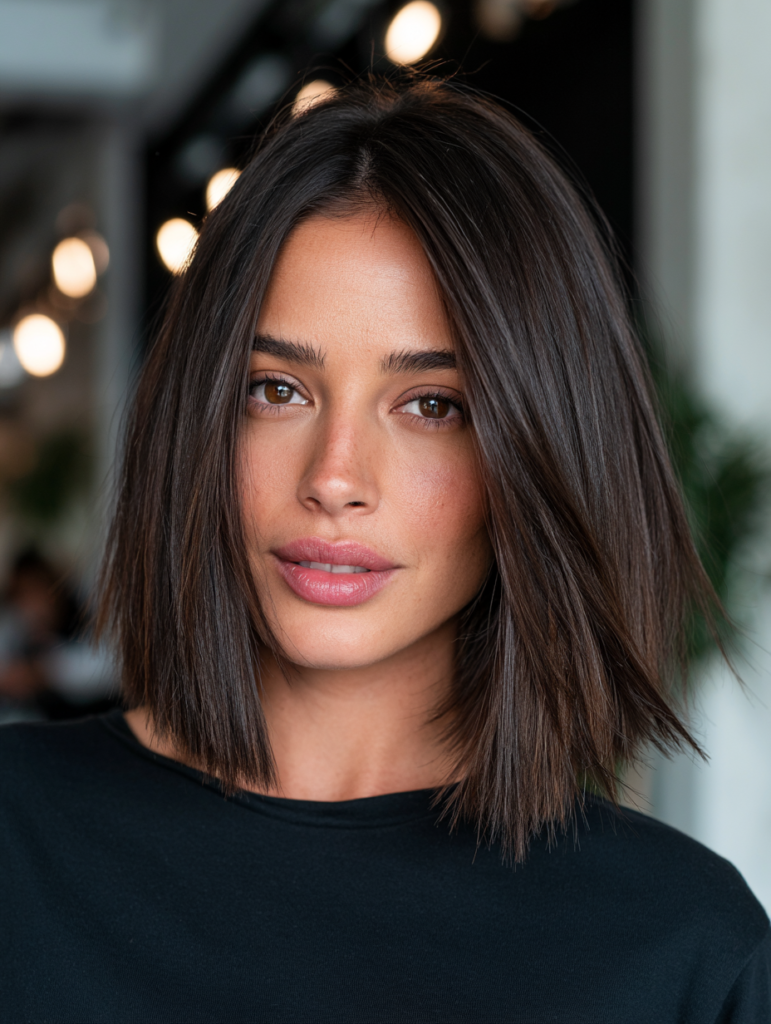
Instead of pressing the roots completely flat, preserve gentle elevation at the crown for better overall balance. A slightly curved finish through the ends prevents the haircut from appearing severe while maintaining its polished character. This version works especially beautifully on naturally straight hair or textures that respond well to smooth blow-drying.
Wavy Angled Bob
Soft waves bring movement to the structured outline of an angled bob, creating a flattering balance between precision and relaxation. Beginning the strongest wave pattern below the cheekbones helps avoid excessive width around a round face.

Keep the crown relatively smooth with gentle root lift before introducing loose bends through the middle and ends. Alternating wave directions prevents the haircut from forming a uniformly rounded shape. The longer front sections remain visible beneath the texture, preserving the characteristic angle while giving the style a softer, more approachable personality.
Textured Angled Bob
Textured ends give an angled bob airy separation while preserving its distinctive longer-front silhouette. This broken-up finish can prevent dense hair from creating a heavy horizontal line around the lower portion of a round face.

Internal texturizing removes strategic bulk without shortening the important front sections near the jaw. For styling, lightly tousle the ends while keeping the roots controlled and slightly lifted. The result feels modern and effortless, making this variation particularly appealing when you prefer definition without the highly polished maintenance associated with sharper geometric bobs.
Asymmetrical Angled Bob
Combining asymmetry with graduation creates strong directional movement that can beautifully complement round facial features. One front section extends farther than the other, producing diagonal lines that interrupt facial symmetry and encourage a more elongated appearance.

The difference between both sides does not need to be extreme to make an impact. Keeping the back neatly graduated provides structure, while lightly softened ends make the contrasting lengths wearable. An off-center part enhances the asymmetrical effect and gives this bob a contemporary character without requiring elaborate styling or dramatic layering.
Angled Bob With Face-Framing Layers
Face-framing layers add softness around the front of an angled bob without disguising its signature graduated perimeter. Starting the shortest sections below the cheekbones keeps volume away from the widest area of a round face.

Longer pieces can gradually blend toward the jaw and neckline, producing fluid movement throughout the haircut. Styling these sections slightly away from the face opens the cheek area while highlighting the eyes. This combination is ideal when you want noticeable shaping but prefer something gentler than a sharply cut, completely uniform angled bob.
Angled Bob With Side-Swept Bangs
Side-swept bangs complement an angled bob by introducing another diagonal line across the face. Their sweeping direction adds movement around the forehead while the longer front sections of the bob provide definition beneath the cheeks.

Keeping the fringe lightweight prevents the upper portion of the hairstyle from appearing too heavy. Blend its longest pieces into the surrounding layers for a seamless transition toward the jaw. This pairing offers plenty of softness while retaining the structured character that makes angled bobs particularly effective for balancing round facial proportions.
Graduated Angled Bob
Graduation through the back gives an angled bob controlled volume while creating a smooth transition toward longer front sections. When the elevation remains moderate, the haircut gains shape without becoming excessively rounded behind the head.

For a round face, extending the front beyond the jaw helps establish a longer visual frame. Subtle stacking can provide additional crown lift, especially for finer textures needing dimension. Keep the sides relatively streamlined and allow the forward angle to remain visible, whether you choose a sleek blowout or gently tousled finish.
Choppy Angled Bob
Choppy ends bring a playful edge to an angled bob by breaking the perimeter into lighter, more separated sections. This irregular texture prevents the haircut from looking overly solid around the jaw and cheeks.

Keeping the front noticeably longer preserves the lengthening effect that makes angled shapes so flattering for round faces. Small amounts of styling paste can define individual pieces without creating stiffness or heaviness. With subtle crown lift and relaxed movement through the ends, this version offers a contemporary alternative to perfectly smooth, sharply graduated bob haircuts.
Creating the Perfect Angled Bob Finish
Styling an angled bob starts with emphasizing its forward-moving silhouette. When blow-drying, lift the roots gently around the crown while directing the sides downward instead of outward. A round brush can create smoothness and subtle curvature, while a flat iron makes sharper angles more noticeable. Avoid concentrating excessive volume directly beside the cheeks.
For wavy or textured versions, introduce bends primarily below the cheekbones and leave the ends slightly separated. Lightweight styling cream helps control flyaways, while texture spray can enhance choppier finishes without hiding the graduated shape.
Final Thoughts
Angled bob haircuts for round faces offer numerous ways to combine structure, movement, and flattering facial framing. Longer front sections establish vertical direction, while graduation, asymmetry, strategic layering, and thoughtful parting can further personalize the silhouette.
The ideal version depends on how much contrast and maintenance you prefer. Sleek angled bobs emphasize precision, whereas textured and wavy variations provide a softer finish. Longer options offer extra versatility, while dramatic angles create stronger definition. Consider your natural texture and daily routine when deciding which variation deserves a place in your next salon consultation.
